
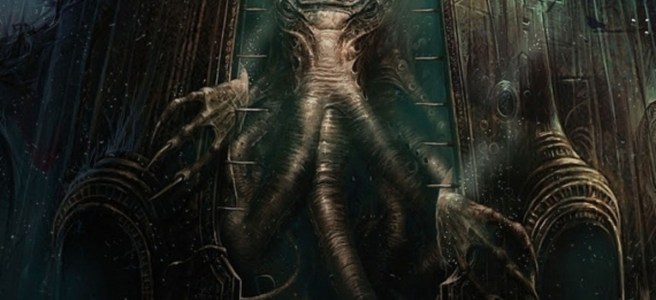
For our anniversary this year, my wife gifted me the Keeper’s Rulebook for Call of Cthulhu 7th Edition. While being the best gift possible, it reminded me of how many times I see the phrase “Dungeons&Dragons is all my friends and I will play,” floating around forums. Though I love D&D and the many adventures I’ve had playing it, this notion always struck me as odd. This post, in the hopes of either convincing you to branch out or reminding you to finally brush off that dusty, unopened copy of Hunter: The Vigil, is all about espousing some of the greatest reasons why playing new TTRPGs can make your D&D game even better.
1) Incorporate Better Mechanics
While Dungeons&Dragons has seen a great many improvements over the years, with each edition seeking to create a more fulfilling game than the last, the game still carries a number of mechanical artifacts that hinder the overall experience. For example, the arbitrary nature of assigning Difficulty Checks (DCs) to skill checks. The Player’s Handbook provides a six-tier system (5-10-15-20-25-30) for assigning DCs, but leaves it to the Dungeon Master to determine the exact DC for almost every skill check in the game. When Players come up with unexpected (and often outlandish) solutions to the problems they face, this usually means the DM will be assigning DCs on the spot, often deciding after the Player’s roll whether or not it’s succeeded. This creates a scenario where skill rolls are an illusion of consequence rather than a reflection of a character’s abilities marred by circumstance.
Call of Cthulhu, meanwhile, treats skills as actual percentages, with each point invested in the skill directly improving the character’s chance of accomplishing goals with that skill. If I have 35 points in Brawl, for example, I have a 35% chance of successfully landing a blow. I love this system; it simultaneously reinforces player agency over their character (the Player has direct control over the likelihood they’ll succeed in a particular skill) and removes a major thorn from the DM’s side when running the game. In my future D&D campaigns, I’m tempted to adopt a 1d100 system like this for skill checks!
The more systems you play, the more intriguing workarounds you’ll find for mechanic problems you encounter. The inverse may also be true; you may discover D&D has addressed a problem far better than the other system!
2) Unique Enemies to Encounter
Despite the plethora of official (Monster Manual, Volo’s Guide to Monsters, and Mordenkainen’s Tome of Foes) and homebrew resources out there, DM’s are absolute gluttons for new, unusual opponents to throw at their PCs. While I’m a strong proponent of making unique monster to fit your needs (as noted in my Monster Mash post), sometimes you just want to be lazy. Trust me, I get it.
An incredibly easy solution to this issue? Borrow the enemy from a different game! If you don’t like the way vampires work in D&D, implement various elements from the eponymous Vampire: The Masquerade. Perhaps abilities like Misty Escape, Shapechanger, or other strange abilities are inherited from a vampire’s sire, creating numerous types of vampires somewhat more akin to their lycanthropy cousins. Before you know it, you’ll have an entire vampire ecosystem ready for your setting; perhaps their inter-clan struggles will become the focus of an entire campaign.
Want a more high-tech, science-fantasy feel to your makeshift Spelljammer campaign? Use any of the infinite possibilities found in Fantasy Flight’s Star Wars line of games.
When you look beyond what D&D has to offer in terms of creature variety, the possibilities are endless. Better yet, your Players who also DM or otherwise voraciously read through published materials will be caught unawares alongside the rest of your group. Admittedly, trying to convert the creatures into D&D 5e rules will likely take longer than reskinning an existing monster, but I implore you to try it.
3) Get Out of the Flow
When it comes to writing, you may have heard the tip about walking away from your first draft and coming back the next day to review it with fresh eyes. Not only is this tip great for writing well, but it also applies to running TTRPG campaigns and short scenarios. In both cases, it’s easy to lose yourself in the story being told. So much so, unfortunately, that you can begin to lose sight of how your villains and setting can be used to tell a story in favor of simply “going with the flow” of what your PCs are doing.
Shifting gears, either as a Player or GM, into another game system forces you to break from the flow. You’re “walking away” from the D&D campaign to adjust to the new game’s rules. When you come back to plan your campaign again, you’ll likely spot plot hooks, branching stories, or abandoned encounters you missed while being stuck in the “flow.”
When choosing new games to run/play, try something entirely unrelated. While going from D&D to Pathfinder may be easier to pick up, it’s also too similar to your base game. You plant one foot in both worlds, never giving your brain the hard-reset it needs. Some of the game systems I mentioned above, Star Wars, Vampire: The Masquerade, Call of Cthulhu, are great games to use when shifting gears.
Conclusion
As the adage goes, “variety is the spice of life.” There are so many games out there, each with exciting new mechanics or reinventions of tried (and tired) ones. You owe it to yourself to create the best experiences possible with the game you’re playing, so why stick to the rules provided by your game? Better yet, you can even find strange, new monsters to throw at your Players, forcing them to adapt to powers previously unknown to D&D. Finally, new systems are a great way to pull yourself away and remember why you’re playing D&D in the first place; new perspectives are vital for any DM.
Want to stay up to date with the latest happenings on Critical Hit Guru? Click the Follow button and type the email address you want to receive notifications for new posts!
We’re now on Twitter and Facebook! Search for @CriticalHitGuru on Twitter and the Critical Hit Guru page on Facebook to chat, ask questions, or just stay in the loop.
I’m Dungeon Master’s Guild official! For a thrilling military-themed heist all about saving a captured comrade, check out Rescue at Brightwell today.
 Amethyst Wulf Games
One thought on “3 Ways Playing a Different TTRPG Improves Your D&D Game”